30. July 2026
Report on Advisory Board Member Milena Berks’s foreign assignment with the RECSA regional organization in Nairobi
Uncontrolled access to illegal small arms is one of the greatest—yet often underestimated—drivers of violence and instability. It exacerbates conflicts, strengthens organized crime, and hinders sustainable peace processes—far beyond national borders. This is precisely why controlling small arms and ammunition is far more than a technical task: it is a central component of effective civilian crisis prevention.
A striking example of this is Germany’s cooperation with the Regional Centre on Small Arms (RECSA) in East and Central Africa. By building regional capacity, training local experts, and promoting cross-border cooperation, this partnership helps prevent violence, strengthen state structures, and create sustainable security.
However, such successes cannot be taken for granted. They require long-term political support, reliable funding, and multilateral partnerships.
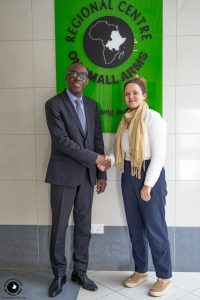
In a report on her field assignment for the bicc—Bonn International Centre for Conflict Studies in Nairobi, co-authored with Anne Karwitha of the Regional Centre on Small Arms (RECSA), Advisory Board member Milena Berks explains why Germany’s ongoing commitment to regional arms control is an important contribution to civilian crisis prevention and what successes the collaboration has already achieved: detailed report
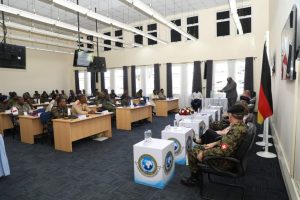
5-day Regional PSSM Training at the Humanitarian Peace Support School in Nairobi, Kenya, 2024, photo by RECSA.
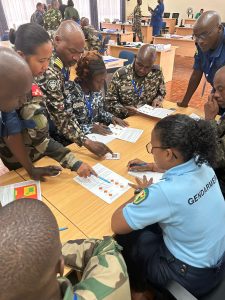 5-day Regional PSSM Training for Francophone member States of RECSA at the Humanitarian Peace Support School in Nairobi, Kenya, 2025, photo by RECSA.